August de Oliveira DDS
Same-Day Crowns: How It Works
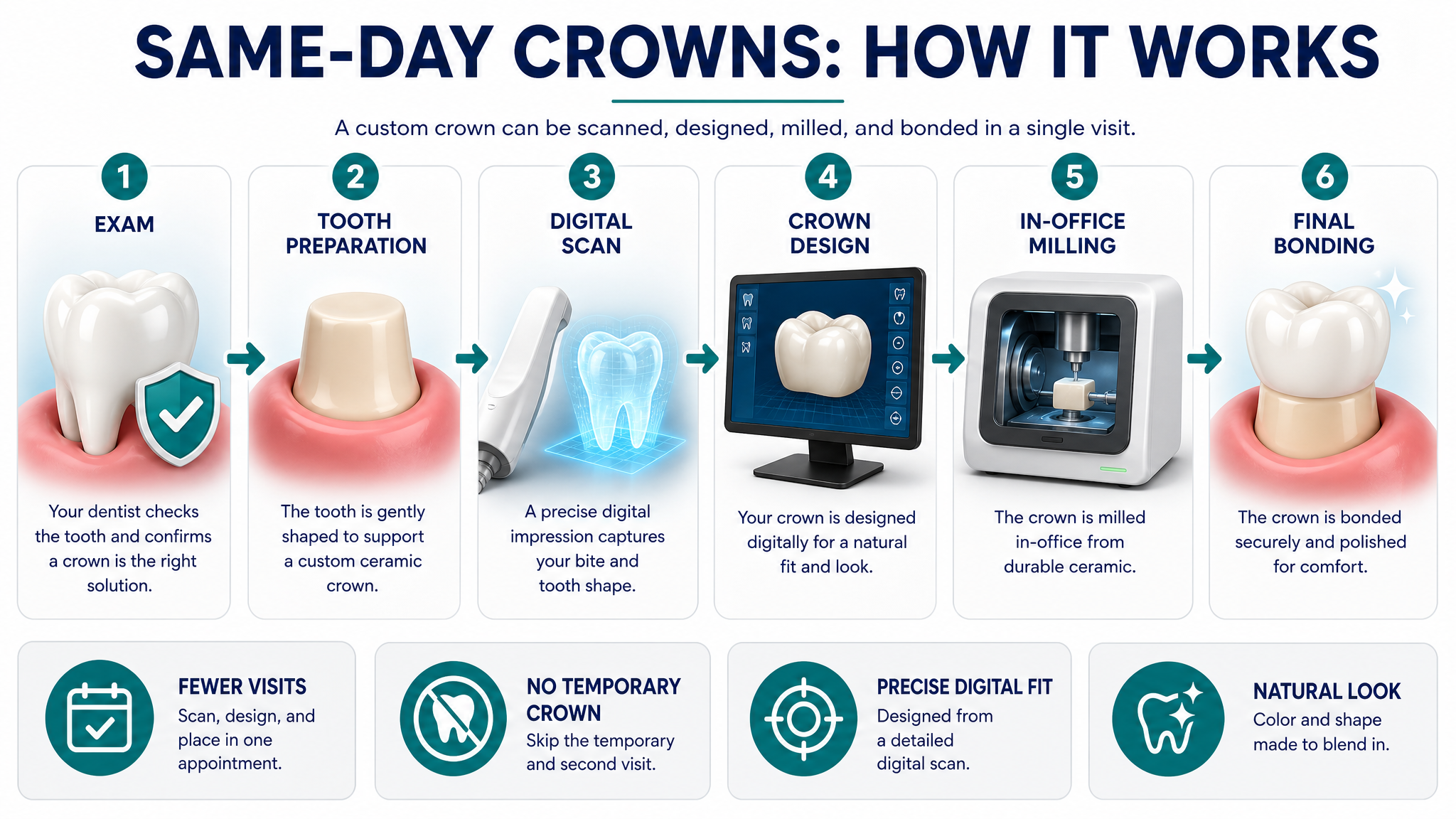 Same-day crowns allow many damaged teeth to be restored in a single visit using digital dentistry. Instead of traditional impressions, temporary crowns, and a second appointment, many cases can be scanned, designed, made, and bonded the same day.
Every tooth is different, but same-day crown technology can make treatment more efficient and comfortable when it is the right option.
How same-day crowns work
The process usually includes:
– Examining the tooth and confirming that a crown is appropriate
– Preparing the damaged or weakened tooth
– Taking a digital scan instead of a traditional impression
– Designing the crown digitally
– Milling the crown in the office
– Bonding the final crown and checking the bite
Benefits of same-day crowns
Same-day crowns can reduce the number of visits, avoid temporary crowns in many cases, and allow the final restoration to be completed efficiently. Digital scanning also helps create a precise fit and a natural shape.
When is a crown recommended?
A crown may be recommended for a cracked tooth, large failing filling, weakened tooth, broken cusp, or tooth that needs stronger long-term protection than a filling can provide.
Same-day crowns in Encino, CA
At August de Oliveira DDS, we use digital dentistry to restore teeth efficiently while focusing on comfort, fit, and long-term prognosis.
August de Oliveira DDS
5400 Balboa Blvd Unit 231
Encino, CA 91316
Phone: 818-783-2981
Website: augustdeoliveiradds.com
Questions to Ask When Choosing a Dentist for Long-Term Care
Questions to Ask When Choosing a Dentist for Long-Term Care
Choosing a dentist is about more than finding the closest office. The right fit should help you prevent problems, understand your options, and make decisions that support long-term oral health.
How Does the Office Plan Treatment?
Ask how the office explains findings, prioritizes urgent needs, and separates ideal treatment from reasonable alternatives. Good planning should be clear, practical, and personalized.
Patients should understand why treatment is recommended, what happens if they wait, and what options exist.
What Technology Is Used and Why?
Digital x-rays, intraoral photos, 3D imaging, scanners, same-day restorations, and AI-assisted tools can all improve communication and planning when used thoughtfully.
Technology should support better diagnosis, precision, comfort, or education—not just sound impressive.
How Preventive Is the Approach?
A strong dental home should help patients reduce future problems, not just repair teeth after they break. Cleanings, gum care, bite evaluation, home-care coaching, and early diagnosis all matter.
Preventive care is especially important for patients with a history of cavities, gum disease, clenching, dry mouth, or complex dentistry.
Does the Office Communicate Clearly?
Look for an office that explains treatment in plain language, shows photos or x-rays when helpful, and gives patients space to ask questions.
Clear communication builds trust and helps patients make confident decisions.
To learn more about our office philosophy and comprehensive care, visit: Learn more here.
Do I Need a Night Guard?
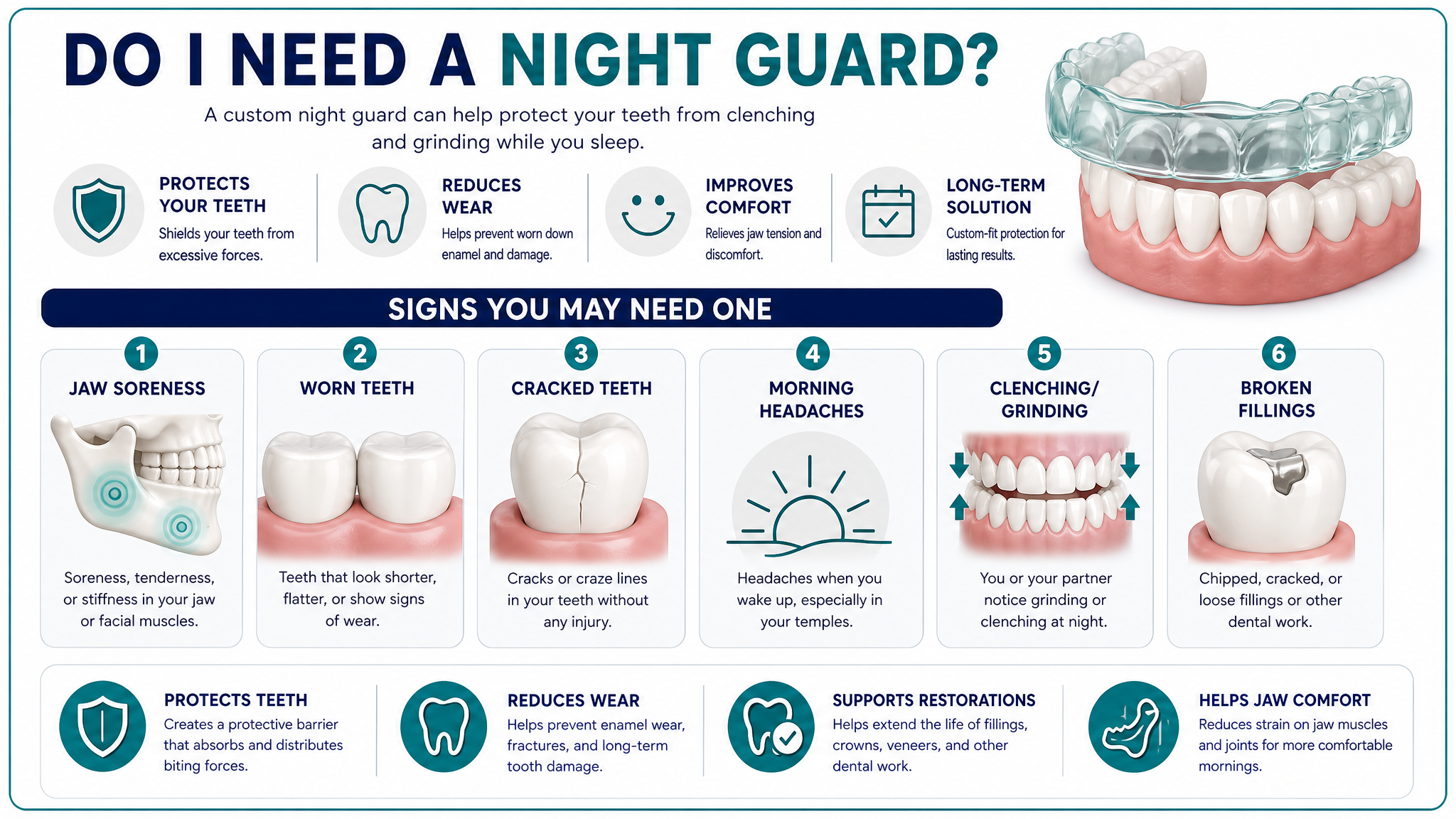 Many people clench or grind their teeth without realizing it, especially during sleep. Over time, grinding can wear teeth down, strain the jaw, crack teeth, and damage dental restorations.
A night guard can help protect your teeth from the forces of clenching and grinding.
Signs you may need a night guard
You may benefit from an evaluation if you notice:
– Jaw soreness or tightness in the morning
– Worn, flattened, or chipped teeth
– Cracked teeth or broken fillings
– Morning headaches
– Tooth sensitivity without an obvious cavity
– A partner noticing grinding sounds at night
How a night guard helps
A custom night guard creates a protective barrier between the teeth. It does not stop every clenching habit, but it can reduce wear, protect restorations, and help distribute forces more evenly.
Why custom matters
Over-the-counter guards can help some patients temporarily, but they may not fit as precisely. A custom dental night guard is designed for your bite and can be more comfortable and durable for long-term use.
Night guards in Encino, CA
If you think you may be grinding or clenching, August de Oliveira DDS can evaluate your bite, tooth wear, and restorations to determine whether a custom night guard makes sense.
August de Oliveira DDS
5400 Balboa Blvd Unit 231
Encino, CA 91316
Phone: 818-783-2981
Website: augustdeoliveiradds.com
What to Expect at a Dental Implant Consultation

What to Expect at a Dental Implant Consultation
A dental implant consultation is not just a quick look at the missing tooth. It is a planning visit where the dentist evaluates the space, bone, gums, bite, medical history, and restorative goal before recommending a path forward.
Reviewing the Missing Tooth Area
The dentist checks the space where the tooth is missing, the shape of the gums, the bite, and the nearby teeth. This helps determine whether the final tooth replacement can be shaped and cleaned properly.
If the space has changed over time, additional planning may be needed before treatment.
Looking at Bone and Gum Support
Implants need stable bone and healthy surrounding tissue. Digital x-rays or 3D imaging may be recommended to evaluate bone height, width, anatomy, and safety considerations.
If bone volume is limited, grafting or a different replacement option may be discussed.
Planning the Final Tooth First
Good implant planning starts with the final crown position. The goal is not simply to place an implant where bone exists, but to place it where it can support a cleanable, functional, natural-looking tooth.
This is why digital planning, scans, and restorative design are so important.
Discussing Timing and Alternatives
Some cases can move quickly, while others require healing time after extraction or grafting. The consultation should also cover alternatives such as a bridge or removable partial when appropriate.
A clear plan helps patients understand cost, timing, risks, maintenance, and expected outcome before starting.
For the main overview of implant options and planning, visit our dental implant page: Learn more here.
Cracked Tooth: What to Watch For
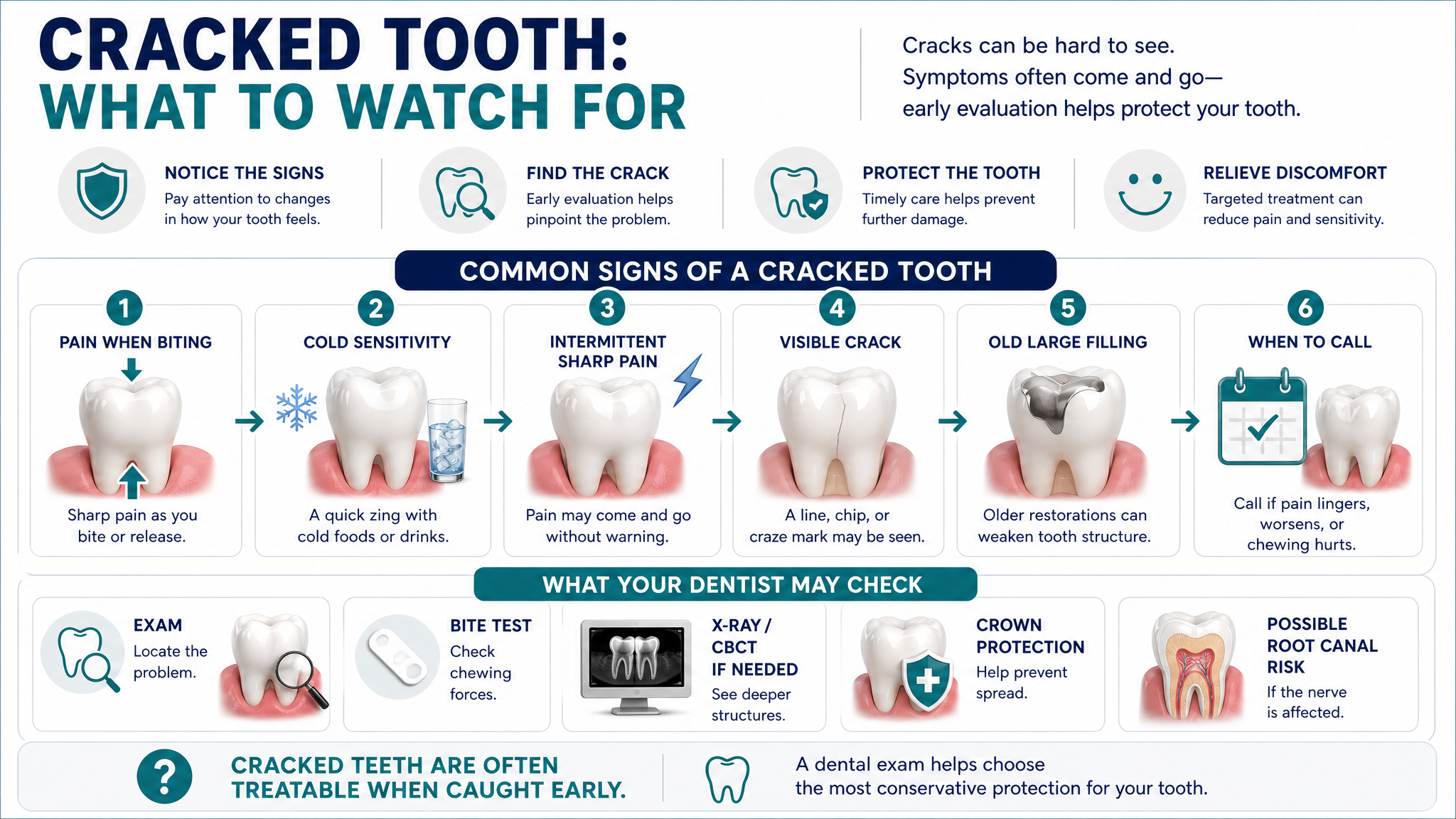 A cracked tooth can be tricky because symptoms may come and go. Some patients feel a sharp pain when biting, while others only notice cold sensitivity or discomfort with certain foods.
Cracks are important to evaluate early because they can worsen over time. The sooner a crack is identified, the better the chance of protecting the tooth.
Signs of a cracked tooth
Common signs include:
– Sharp pain when biting or releasing pressure
– Sensitivity to cold or sweets
– Pain that is hard to locate
– A visible crack or craze line
– Discomfort around an old large filling
– A tooth that feels different when chewing
Why cracks need attention
A crack can allow pressure, bacteria, or temperature changes to irritate the tooth. Some cracks are minor, while others can extend deeper toward the nerve or root. Treatment depends on the location, depth, symptoms, and restorability of the tooth.
How cracked teeth are treated
Treatment may include monitoring, adjusting the bite, replacing an old restoration, placing a crown to protect the tooth, or evaluating the nerve if symptoms suggest deeper involvement. In some cases, root canal treatment may be needed before restoring the tooth.
Cracked tooth evaluation in Encino, CA
If you have pain when biting or suspect a cracked tooth, August de Oliveira DDS can evaluate the tooth and explain the best way to protect it long term.
August de Oliveira DDS
5400 Balboa Blvd Unit 231
Encino, CA 91316
Phone: 818-783-2981
Website: augustdeoliveiradds.com
Dental Implants vs Bridges vs Dentures: How to Compare Your Options
Dental Implants vs Bridges vs Dentures: How to Compare Your Options
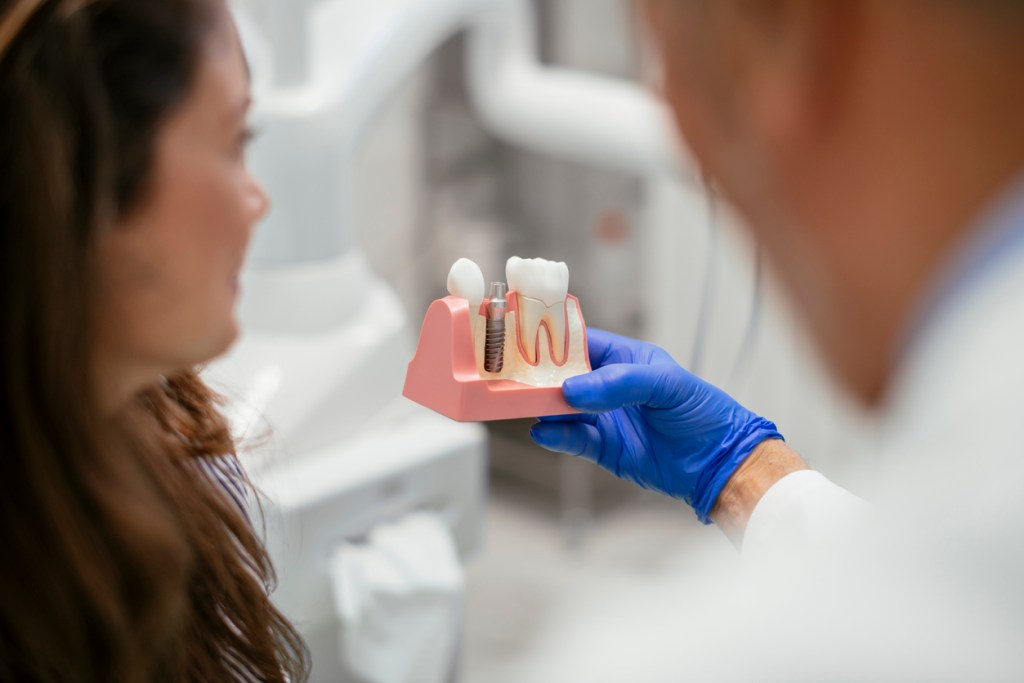
When a tooth is missing, the best replacement depends on bone support, neighboring teeth, bite forces, hygiene, timing, and long-term goals. This guide is meant to help patients compare the main options without replacing a personalized exam.
The Main Tooth Replacement Choices
Most patients compare three broad options: a removable partial denture, a fixed dental bridge, or a dental implant restoration. Each can replace a missing tooth, but they do it in different ways.
A removable partial can be more affordable and easier to modify, but it may feel bulkier and usually does not provide the same chewing stability as a fixed option.
When a Bridge May Make Sense
A bridge can be useful when the teeth on either side already need crowns or when implant treatment is not the right fit. The tradeoff is that the neighboring teeth must support the restoration.
For some patients, that is reasonable. For others, preserving untouched neighboring teeth is a major reason to consider a different option.
When an Implant May Make Sense
An implant can replace a missing tooth without preparing the adjacent teeth. It also helps provide strong chewing support when the bone, gums, bite, and medical history are favorable.
Implants require planning time, healthy bone support, and good maintenance. They are not automatically the right choice for every person, but they can be an excellent long-term option when conditions are appropriate.
Questions to Ask Before Choosing
Helpful questions include: How healthy are the neighboring teeth? Is there enough bone? How strong is the bite? Is the area visible when smiling? How easy will the option be to clean?
The right answer is usually the one that restores function while protecting as much healthy tooth structure as possible.
For a more detailed look at implant treatment in our office, visit our dental implant page: Learn more here.
5 Signs You May Have a Cavity
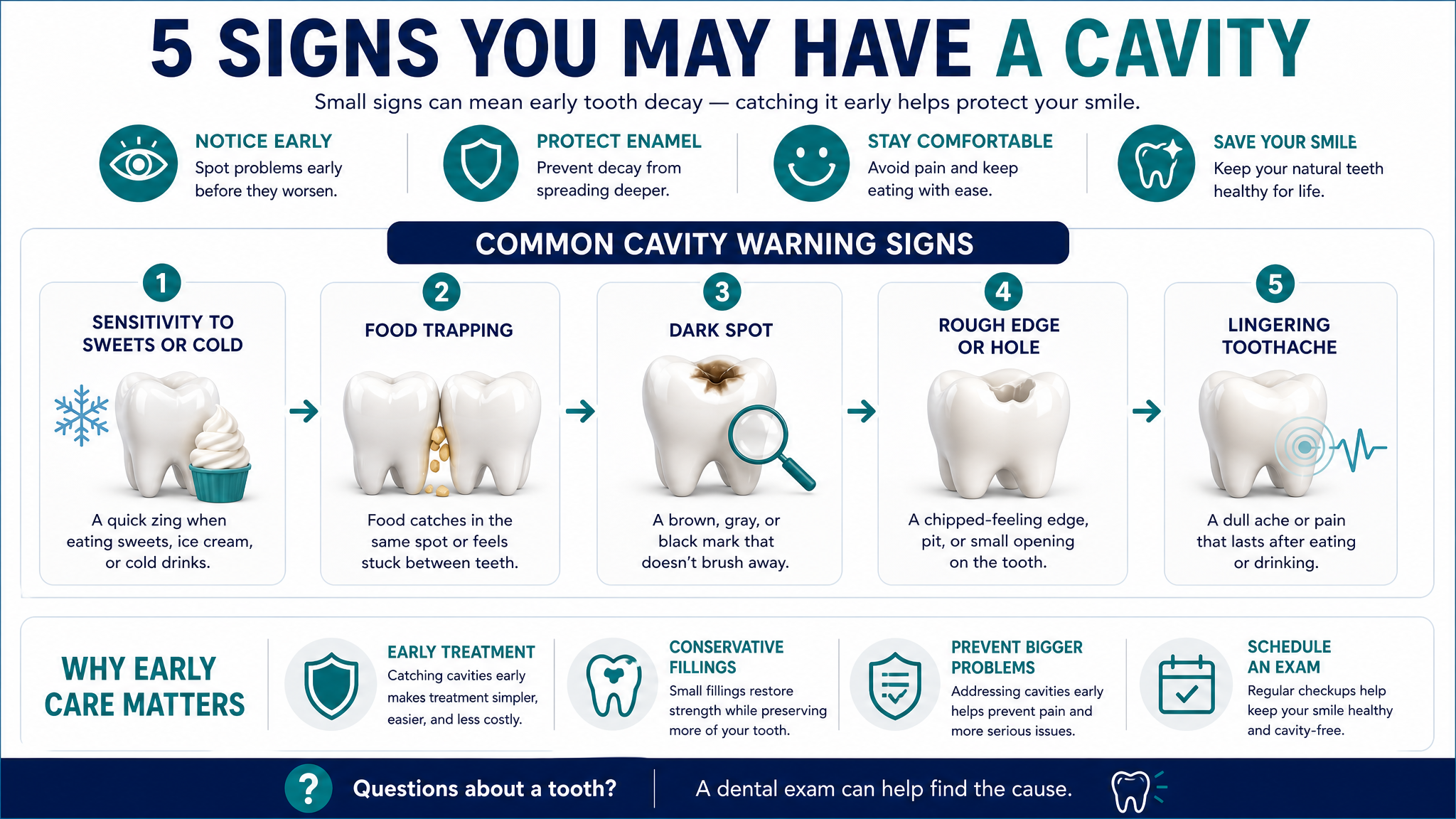 Cavities do not always hurt right away. In fact, many small cavities start quietly and only become painful once the decay gets deeper. That is why regular dental exams and early evaluation are so important.
A cavity is an area where bacteria have weakened the tooth structure. When caught early, treatment is often simpler and more conservative.
5 signs you may have a cavity
You may want to schedule a dental visit if you notice:
– Sensitivity to sweets, cold drinks, or hot foods
– Food getting stuck in the same spot
– A dark spot, stain, or shadow on a tooth
– A rough edge, chip, or small hole you can feel with your tongue
– A toothache that lingers or keeps coming back
Why early treatment matters
Small cavities can often be restored with a conservative filling. If decay spreads deeper, the tooth may need a larger restoration, crown, root canal treatment, or even extraction in severe cases.
Early treatment helps preserve more natural tooth structure and can prevent a small problem from becoming more complicated.
What happens during a cavity exam?
Your dentist will check the tooth visually, evaluate symptoms, and review x-rays when needed. Sometimes decay is deeper than it appears on the surface, so a thorough exam helps determine the best treatment option.
Cavity treatment in Encino, CA
If you think you may have a cavity, August de Oliveira DDS can evaluate the tooth and explain the most conservative option that can predictably restore it.
August de Oliveira DDS
5400 Balboa Blvd Unit 231
Encino, CA 91316
Phone: 818-783-2981
Website: augustdeoliveiradds.com
Why Are My Gums Bleeding? Common Causes and What to Do
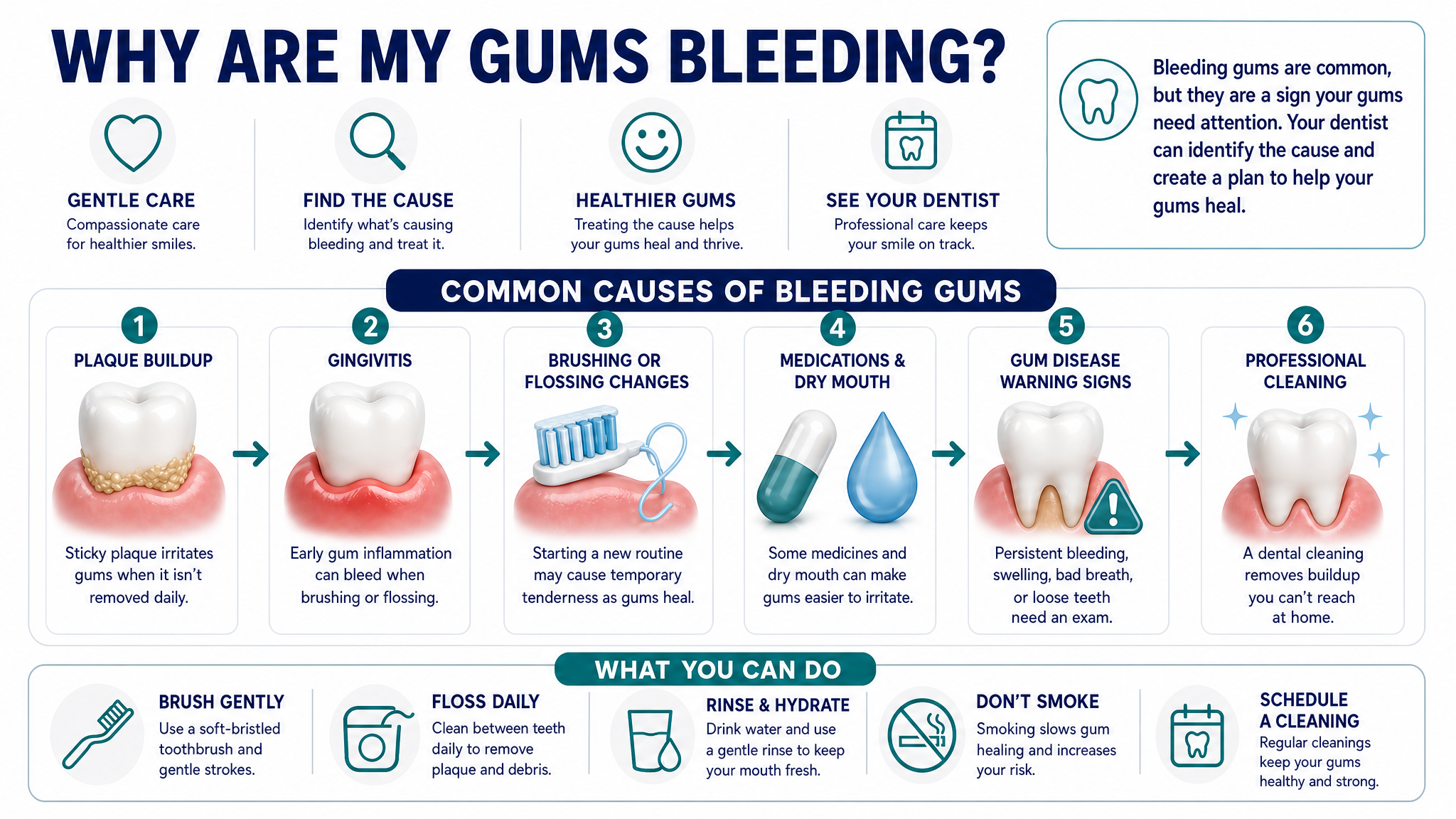 Bleeding gums are common, but they are not something to ignore. If your gums bleed when you brush, floss, or eat, it usually means the gum tissue is irritated and needs attention.
The good news is that bleeding gums can often improve once the cause is identified and treated. The earlier you address it, the easier it is to protect your gums, teeth, and long-term oral health.
Why do gums bleed?
Gums can bleed for several reasons, including:
– Plaque buildup along the gumline
– Gingivitis, which is early gum inflammation
– Flossing after a long break
– Brushing too hard or using a hard toothbrush
– Tartar buildup that needs a professional cleaning
– Dry mouth or medication-related changes
– Gum disease that needs evaluation and treatment
When plaque sits along the gumline, the gums can become inflamed, tender, swollen, or more likely to bleed. Bleeding is your body’s way of signaling that the tissue is irritated.
Does bleeding mean I am doing something wrong?
Not necessarily. Many patients notice bleeding when they restart flossing, change routines, or have areas that are difficult to clean. The important thing is not to ignore it or stop cleaning the area completely.
Your dentist can help determine whether the bleeding is from plaque, tartar, brushing technique, gum inflammation, or something more advanced.
When should bleeding gums be checked?
You should schedule a dental visit if your gums:
– Bleed regularly when brushing or flossing
– Feel swollen, tender, or puffy
– Look red instead of healthy pink
– Recede or make teeth look longer
– Bleed in one area repeatedly
– Come with bad breath or a bad taste
– Have not improved after improving home care
How are bleeding gums treated?
Treatment depends on the cause. For many patients, a professional cleaning, improved brushing and flossing technique, and regular maintenance visits can make a big difference.
If gum disease is present, deeper cleaning or periodontal therapy may be recommended. The goal is to reduce inflammation, remove bacteria and tartar, and help the gums heal.
Bleeding gums in Encino, CA
If your gums are bleeding, August de Oliveira DDS can evaluate your gum health, explain what is causing the irritation, and create a plan to help your gums get healthier.
August de Oliveira DDS
5400 Balboa Blvd Unit 231
Encino, CA 91316
Phone: 818-783-2981
Website: augustdeoliveiradds.com
Our New Blog!
Our blog has recently been set up. Please check back soon!